The ring on your finger already grades your sleep, scores your readiness and nags you about your bedtime. Now its maker wants it to do something more ambitious: point you to a doctor. TechCrunch reported on November 10 that Oura has agreed to acquire Counsel Health, an AI-native primary care startup, for $625 million.
A clinic that already lives in the app
This is not a cold introduction. Counsel has been integrated into Oura’s app since June, which means Oura’s users have been test-driving the acquisition target for months. Counsel’s model pairs an AI medical chat with access to licensed physicians — ask the software first, escalate to a human doctor when it matters.
Counsel arrives with credible backing and a surprisingly small war chest for a $625 million exit: it had raised $25 million in its Series A from a16z and GV, and about $36 million in total. Its CEO, Muthu Alagappan, will become Oura’s AI clinical director, bringing his team of 70 employees with him. TechCrunch notes the deal is expected to close before the end of 2027 — a long runway that hints at how much regulatory and integration work sits between a wellness gadget and actual healthcare.
Why a ring company buys a doctor
Read Oura’s recent months and the logic sharpens. Just weeks ago, the company postponed an IPO of up to $2.2 billion, blaming market uncertainty. Its underlying business, though, is anything but quiet: revenue grew 153% year over year to $533 million in the quarter ended September 30, and its most recent valuation stands at $11 billion, set by a $900 million funding round in October 2025.
A company with that profile doesn’t buy a clinic for the revenue. It buys a moat. Hardware can be copied — rings are a crowded shelf now — but a ring wired directly into licensed care is a different product entirely: the sensor detects, the service treats, and the membership you’re already paying for becomes very hard to cancel.
The hardware behind the strategy
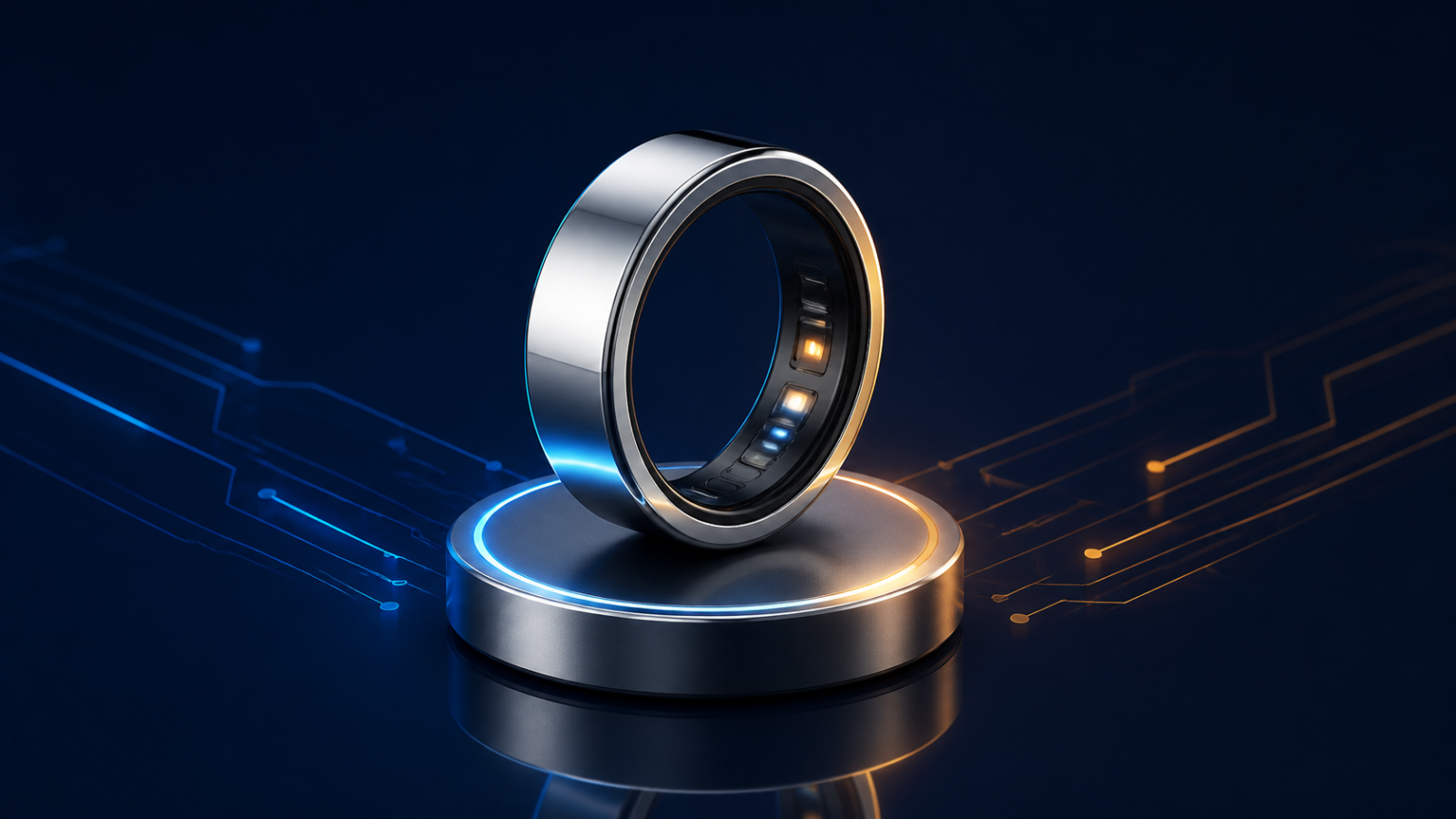
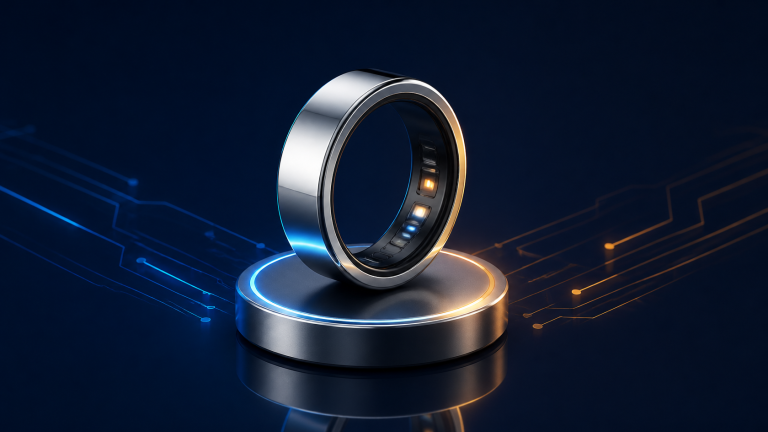
The current ring carrying all this ambition is Oura’s fifth generation — titanium, smaller than before, and rated by Oura for six to nine days of battery while it watches sleep, heart rate, temperature and recovery around the clock:
Oura
Oura Ring 5
The Oura Ring 5 shrinks Oura's smart ring formula into its smallest body yet: a fully titanium ring just 6.09 mm wide that still tracks more than 50 health metrics.
- Metrics: Tracks 50+ health metrics
- Sensors: Red + infrared LEDs (blood oxygen SpO2); green + infrared LEDs (heart rate, HRV, respiration, 24/7); digital temperature sensor; accelerometer
- Battery: 6–9 days per charge by size/use; full charge ~80 minutes
As an Amazon Associate I earn from qualifying purchases.
As an Amazon Associate I earn from qualifying purchases.
Whether regulators, doctors and users all agree that a sleep score should open the door to a consultation is the billion-dollar question Oura is now spending $625 million to ask. If it works, the humble ring stops being a diary of your health and becomes the reception desk of your healthcare.
The Bit Take
Yesterday it told you that you slept badly; tomorrow it may book the appointment to find out why. Oura isn’t selling rings anymore — it’s selling the shortest possible distance between “something feels off” and a doctor who can check.
Sources
- TechCrunch, “Oura to acquire AI-native primary care startup Counsel Health for $625M”, 2026-11-10

Oura Ring 5
Check price on Amazon