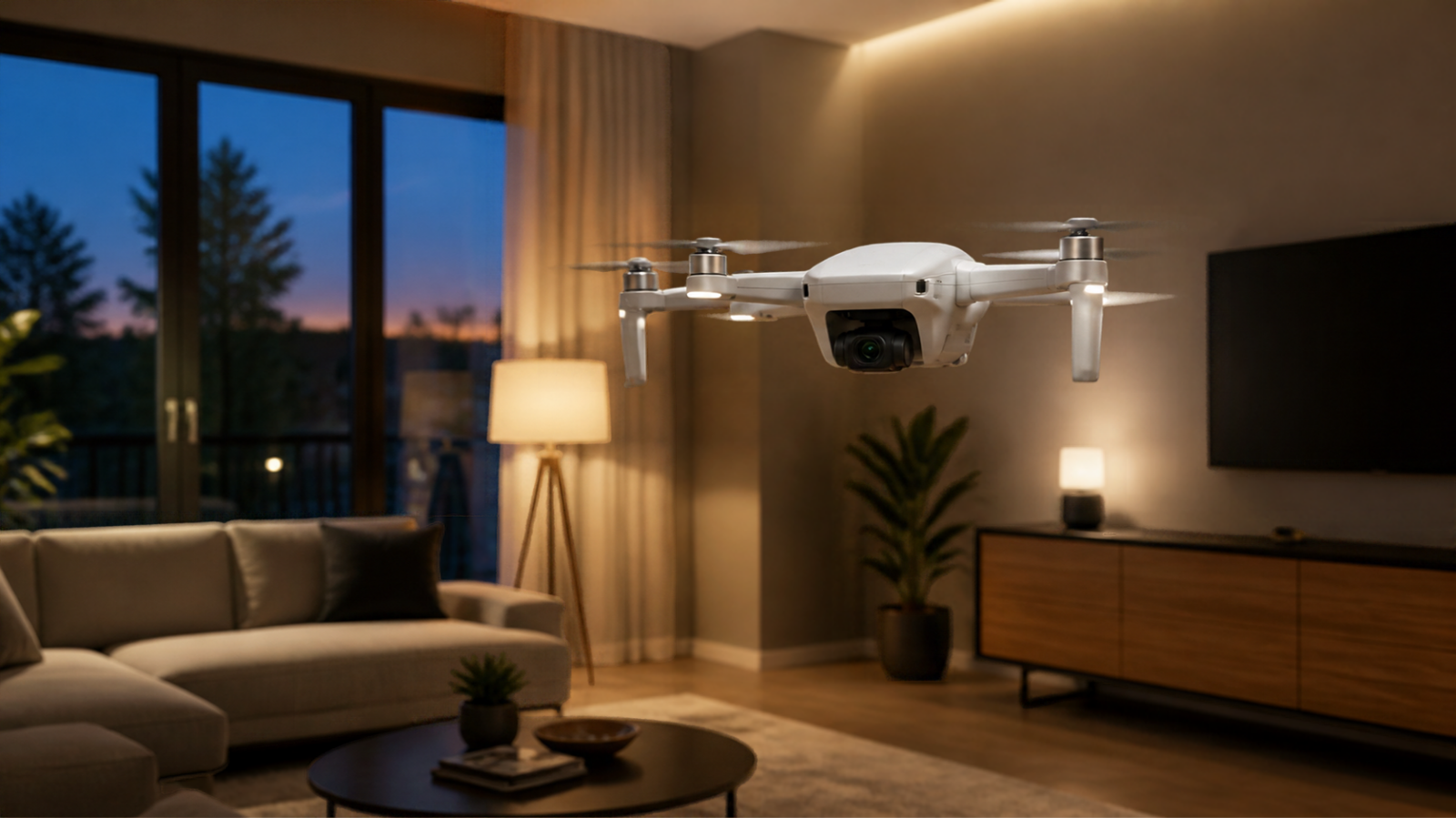
Amazon’s Ring has confirmed that its indoor security drone, the Ring Drone Cam, will not ship with manual flight controls. When the $250 device reaches homes in January, it will fly only by itself, following routes its owner sets in advance and steering around obstacles with a system Ring calls AI Pilot. There will be no way to grab the controls and steer it around the house.
The confirmation came after a rough public outing. On CBS Mornings, Ring founder Jamie Siminoff handed the controls of an early prototype to technology reporter Jo Ling Kent, who flew it from the app on her phone. The drone went down twice while she was piloting it.
Two crashes in one demo
The first crash happened after the drone’s collision-avoidance system failed, according to what Ring told CBS News at the time. Ring also declined to share the footage the drone itself had recorded before that impact.
The second crash was caught on camera. The drone stopped responding to manual input, drifted, and hit a wall. Siminoff blamed a lost internet connection — the same connection the drone needs to fly on its own. The drone is designed to stop and land when it loses connectivity. In this case, it did not.
Ring has not said whether the decision to drop manual controls came after that demo. Asked directly, the company did not answer. What it did say, through spokesperson Sam McGee, is that autonomous flight is the better experience: “We explored a lot of features throughout the development, but autonomous flight to patrol points using the AI Pilot is the best customer benefit and experience.”
What the drone will do instead
The Drone Cam is an indoor patrol camera that flies itself. Owners set patrol points around the home, and the drone launches on its own — for example when a door or window sensor trips — flies its route, and returns. It is not built for outdoor flight, and Ring says its software blocks that.
The January launch still has one hurdle left: the drone is scheduled to ship in the United States on January 27, 2027, pending approval from the Federal Communications Commission. Scheduled patrols and recordings will also require a Ring Protect plan.
The timing is awkward for Ring, but the logic is hard to argue with. A security camera that patrols your home on its own is only useful if it does not smash into the television. If the autopilot is reliable, most owners will never miss the joystick. The CBS demo, though, showed what happens when the drone is asked to do something it was not designed for — and why Ring would rather not let customers try.
The Bit Take: A flying security camera is a fun idea until it meets a wall at full speed. Ring is betting the whole product on its autopilot, which is the right call — but only if the autopilot never loses its connection the way the demo unit did.
Sources: The Verge, “Ring confirms its camera drone won’t have manual controls after crashing on CBS News” (2026-11-12); Ars Technica, “Ring cameras go mobile as Amazon debuts AI-powered security drone and robot” (2026-11-10); Amazon, “Ring Drone Cam and Ring Rover Cam: Ring’s new security robots” (2026-11-10).