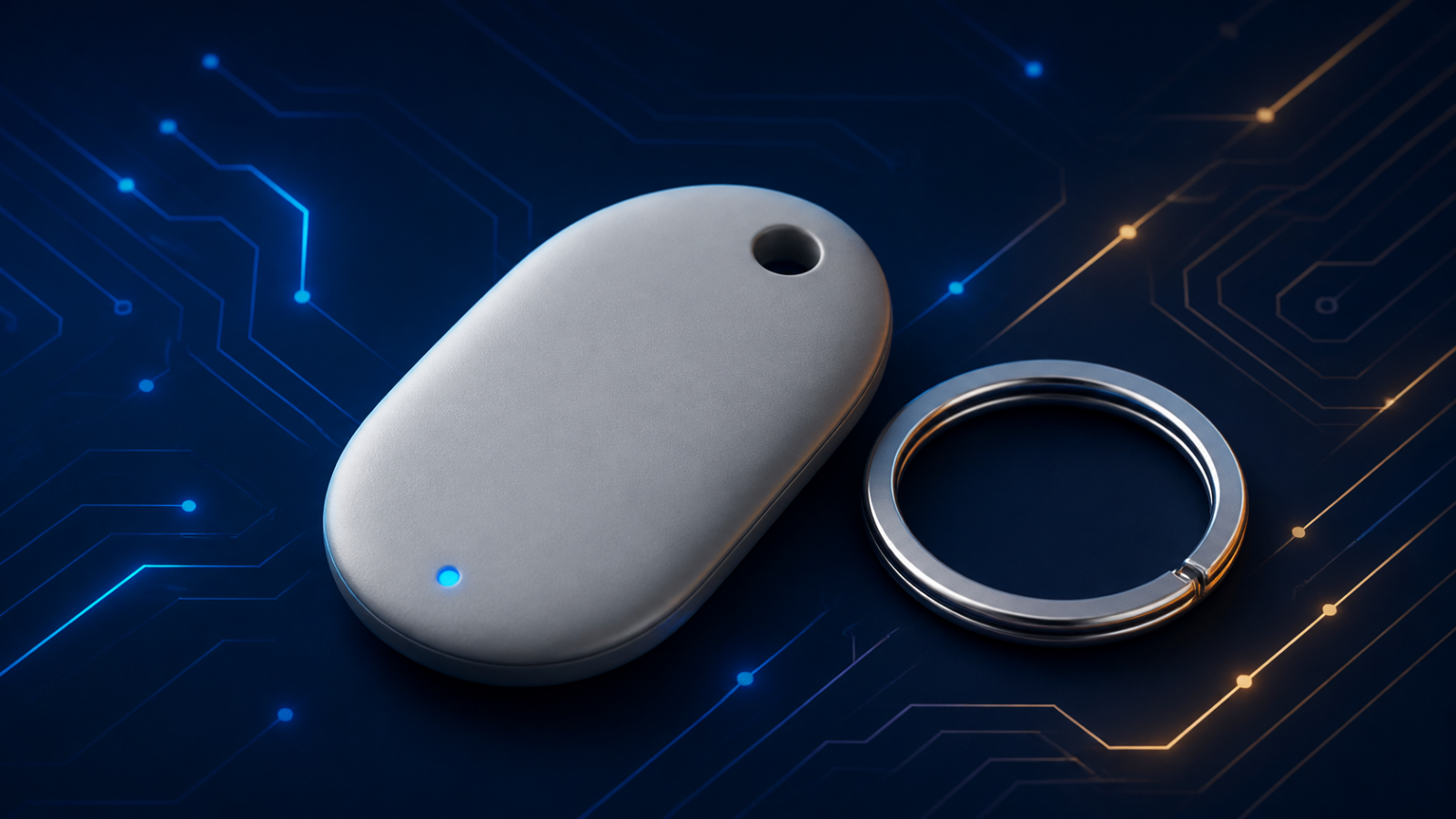
Android users have watched iPhone owners find their keys with smug precision for years. Google’s reply has finally shipped: the Pixel Tag, its first tracker wearing the company name, launched this week as part of the November Pixel Drop, as TechCrunch and Engadget both reported on November 10.
The price is an opening statement. According to TechCrunch, a single Pixel Tag costs $29.99, and a four-pack runs $99.99 — a per-tag price that undercuts buying them one at a time and plants Google’s flag exactly where Apple’s pricing sits (Engadget rounds those figures to $29 and $99).
Borrowed network, serious hardware
A tracker is only as good as the network listening for it, and this is where Google’s late arrival stops mattering. The Pixel Tag leans on the Find Hub network of more than a billion Android devices to spot lost items on the map — a crowdsourced mesh that was already out there walking around in people’s pockets, waiting for a first-party tag to use it.
The hardware itself doesn’t read like a half-hearted accessory. You get Bluetooth plus ultra-wideband (UWB) for precision finding when you’re close, a speaker loud enough to matter at around 80 dB, and a physical button with a neat trick: double-tap the tag and it rings your phone, reversing the usual direction of the search. The body is stainless steel with an IP67 rating, it weighs just 0.4 ounces, and the battery is a replaceable CR2032 coin cell rated for up to a year — so when it dies, you swap a battery instead of buying a new tag.
As an Amazon Associate I earn from qualifying purchases.
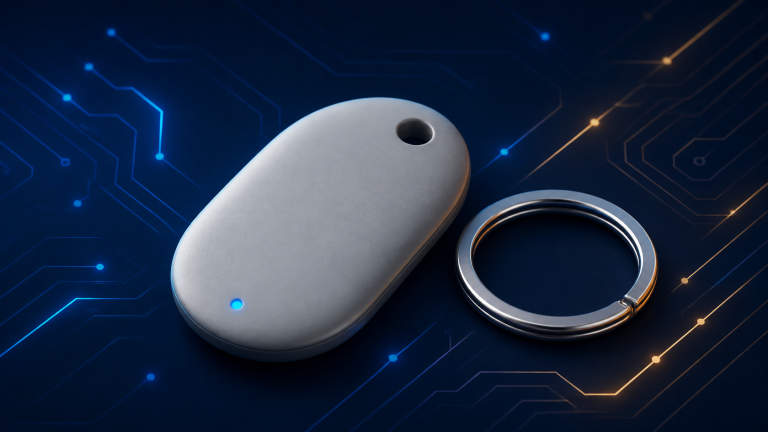
Google Pixel Tag
The Google Pixel Tag is Google's first first-party tracker for the Find Hub network, pairing Bluetooth with ultra-wideband for precision finding across more than a billion Android devices.
- Network: Google's first-party tracker for the Find Hub network (1B+ Android devices, end-to-end encrypted location reporting)
- Setup: Fast Pair setup; Android 9+
- Connectivity: Bluetooth + Ultra Wideband (UWB) for precision finding; Bluetooth Channel Sounding requires Android 16+ and Bluetooth 6.0+
As an Amazon Associate I earn from qualifying purchases.
The thoughtful details
Lost mode is where the design gets quietly clever. If someone finds your tag, it can show them your email, your phone number and a short message from you — turning a stranger into your courier. And because lost things are often a family problem, location can be shared with up to 10 people.
There is a catch hiding in the requirements, and Engadget surfaced it: any phone running Android 9 or later can pair with the tag, but the full feature set asks for Bluetooth 6.0 and Android 16. Owners of older handsets get a tracker; owners of newer ones get the whole trick.
None of this invents a new category. What it does is end an odd era in which Google built the world’s largest finding network and then let everyone else sell the tags for it. Now the network has its own hardware, priced to move in fours.
The Bit Take
Google showed up years late to the “where did I leave my keys” party — but it arrived with a billion volunteers in its pocket and a button that finds your phone back. At $25 apiece in the four-pack, the cheapest insurance your luggage ever gets is a tag that phones home through strangers.
Sources
- TechCrunch, “Pixel Tag, Google’s $30 Android-ready answer to Apple’s AirTag, is now available”, 2026-11-10
- Engadget, “November Pixel Drop coverage”, 2026-11-10
Google Pixel Tag
Check price on Amazon