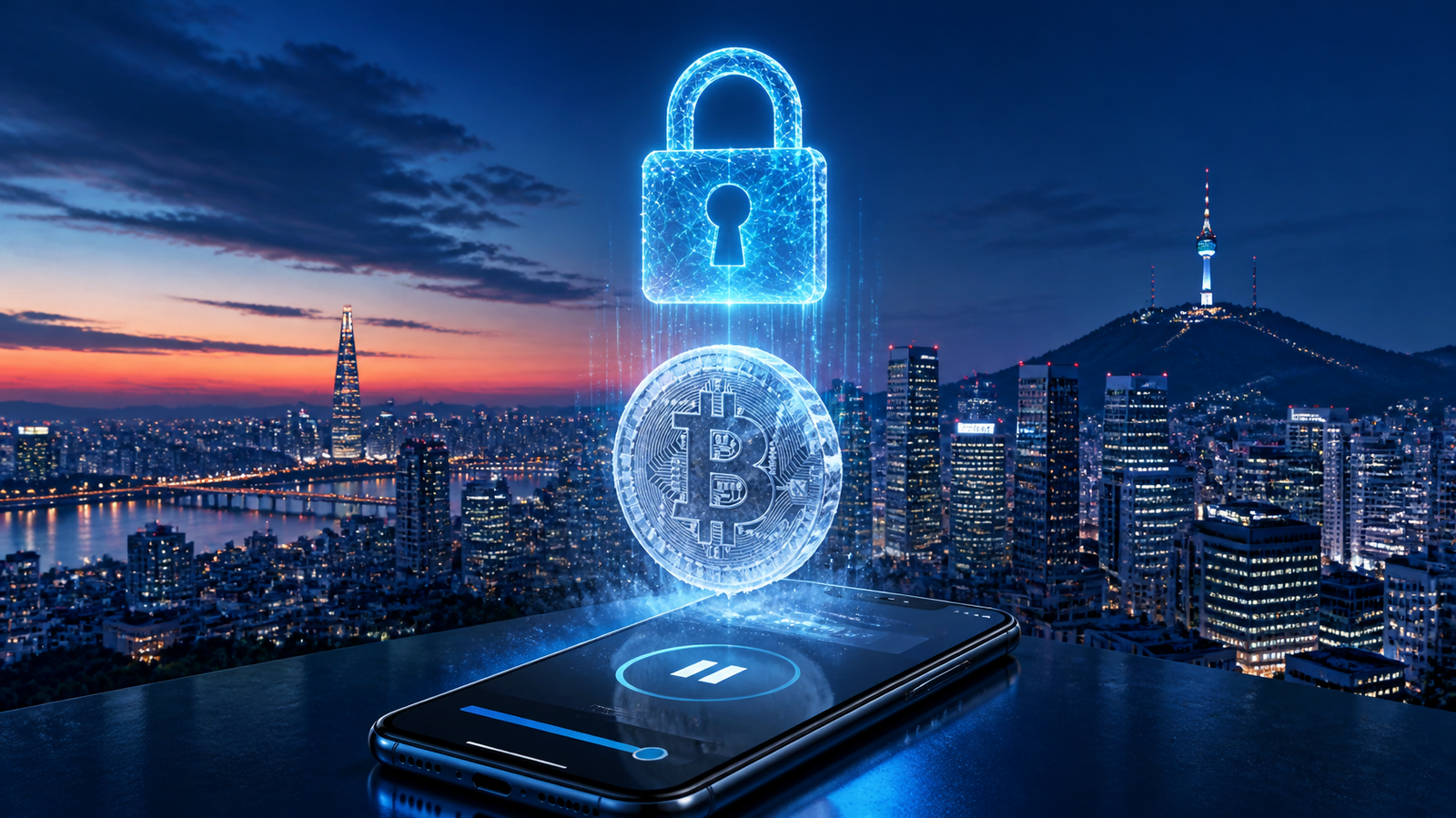
South Korea just changed the answer to a question no exchange wants to face at 3 a.m.: can we lock the doors before we are sure someone is breaking in? Starting soon, the answer is yes.
The Financial Services Commission (FSC) said Thursday it will issue a no-action letter letting crypto exchanges temporarily suspend deposits and withdrawals when a hacking attempt is merely suspected — before any breach is confirmed. The decision came out of a security meeting in Seoul chaired by FSC Vice Chairman Shin Jin-chang. Under the current rulebook, that move sits in a legal gray zone: the Virtual Asset User Protection Act bars exchanges from blocking withdrawals without legitimate grounds, and it only clearly allows restrictions once a hacking incident is established. The no-action letter is the regulator’s written promise not to punish preventive freezes that meet its conditions.
Why now: two scares in three weeks
The timing is no coincidence. On November 6, GOPAX halted trading, deposits and standard withdrawals after receiving an email threatening a cyberattack — even though, as a company representative stressed, no breach had actually occurred. Two weeks earlier, trading platform Prabang suspended services after detecting abnormal withdrawals from a hot wallet, reporting about $70,000 in losses.
Regulators had already been counting the weak spots. In October, the FSC found cybersecurity deficiencies at 130 of 555 financial companies reviewed nationwide, and it separately named GOPAX operator Streami and Prabang among 16 companies tied to earlier security incidents.
The rest of the package
The freeze permission is only one piece of a broader security push. The FSC also called for round-the-clock monitoring and incident response, higher cold-wallet holdings, and stronger insurance coverage and reserves. Exchanges that cannot staff continuous monitoring would have to process deposits and withdrawals only during staffed hours — and tell users in advance. South Korea already requires exchanges to keep at least 80% of customer crypto in cold storage.
The government is also preparing a longer-term stick: a forthcoming digital assets law that would impose bank-level liability for damages on virtual asset exchanges.
For users, the practical effect is a trade-off worth knowing about. A withdrawal request could now be blocked before any public confirmation of an attack — which is exactly the point when funds can move in minutes, but also exactly the kind of power that needs the guardrails the FSC says it will attach. The letter, crucially, does not hand exchanges a blank check: preventive freezes are covered only when they meet the specified conditions.
The Bit Take: For years, Korean exchanges had to watch a suspected break-in and wait for proof before touching the exits — a rule written for a world where hacks announced themselves. Seoul just admitted the obvious: by the time a hack is “clearly established,” the money is usually gone. The real test now is whether “suspected” stays a high bar, or becomes the excuse of first resort.
Sources: Cointelegraph, “South Korea to Allow Crypto Withdrawal Freezes Over Suspected Hacks” (2026-11-12); The Korea Herald, “Crypto exchanges to be allowed to freeze withdrawals on mere suspicion of hacking” (2026-11-12); crypto.news, “South Korea to allow crypto exchanges to block withdrawals if hacks are suspected” (2026-11-12).